Hotel Tibet
Hotel Tibet, a family-run boutique hotel that have blended traditional Tibetan designs with a touch of modern simplicity.

Expedition and Climbing

Duration
26 Days Trip
Meals
25B, 26L, 25D
Start Point
Kathmandu
End Point
Kathmandu
Style
Guided Trekking Adventure
Max. Altitude
6,476 m at Mera Peak
Trip Grade
Strenous
Lodging
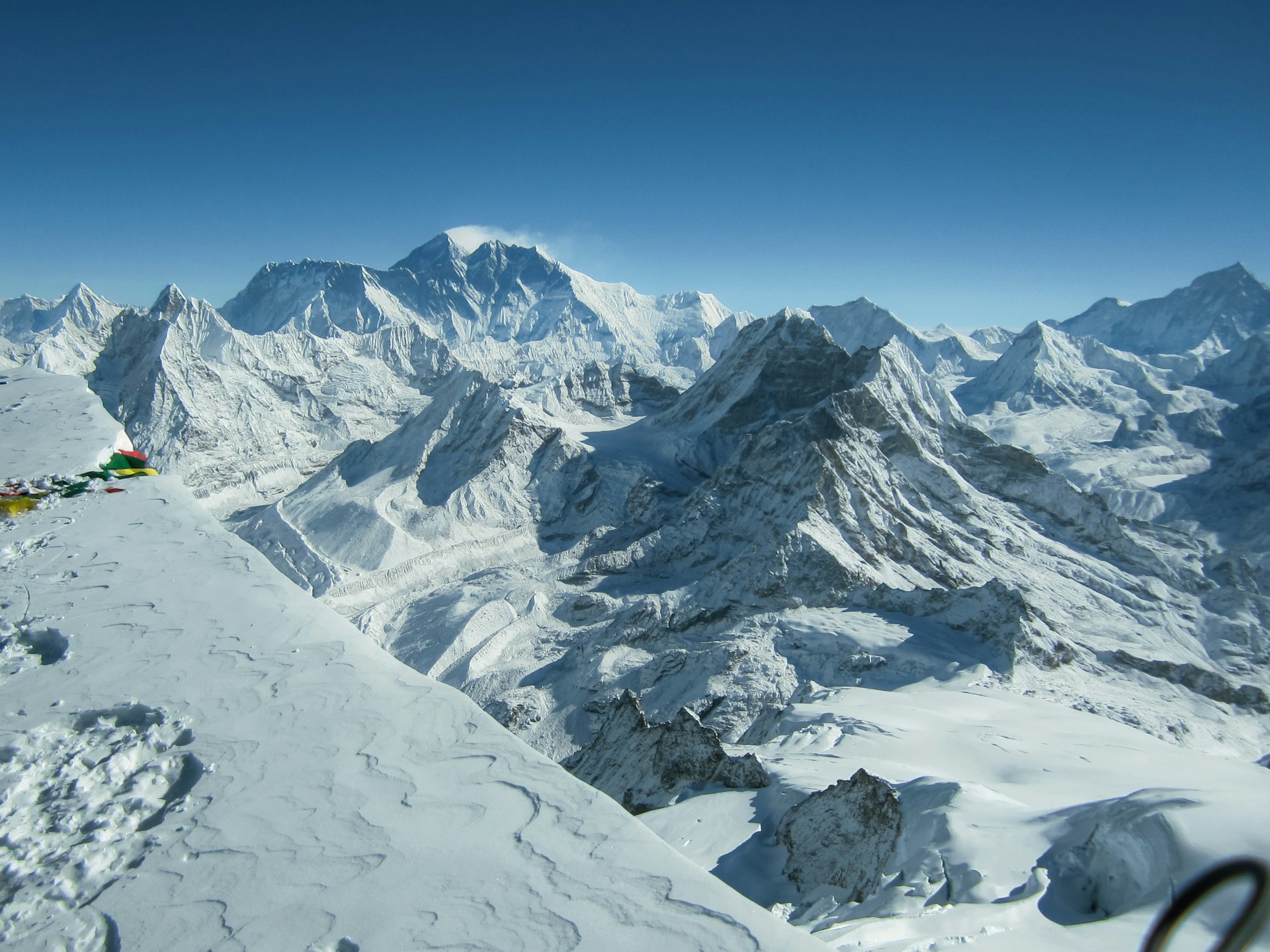
Teahouses (Mountain Lodges), Hotels in KathmanduThe Mera Peak & Amphu Labcha Pass trek is one of Nepal’s most exciting high-altitude adventures, perfect for trekkers seeking a true Himalayan challenge beyond the classic routes. This journey takes you deep into the untouched Hinku Valley, leading toward Mera Peak (6,476 m)—the highest trekking peak in Nepal—where the summit rewards you with an unforgettable 360° panorama of Everest, Lhotse, Makalu, and countless surrounding giants.
From the success of Mera, the adventure intensifies as you approach the dramatic Amphu Labcha Pass (5,845 m), a technical and thrilling crossing that combines fixed-rope sections, glacier travel, and steep alpine terrain. After conquering the pass, you join the legendary Everest Base Camp trail, blending raw wilderness with classic Sherpa culture and world-famous mountain views.
The trek to Mt. Everest Base Camp is tremendous and visit of the pristine Sherpa villages and monasteries makes the trip memorable over a lifetime. This trip requires a well-supported crew and great stamina because of the high altitude and its remoteness.
This trek is designed for experienced, ambitious trekkers who want remote landscapes, big-mountain scenery, and a dose of mountaineering excitement—all in one unforgettable expedition.
You will arrive at the Tribhuvan International Airport, Kathmandu, Nepal. Once you arrive, our representative will be holding cards with your name to welcome you and drive you to the hotel.
Upon reaching the hotel, you will get refreshed and rest. Or you can explore Thamel, the liveliest area in Kathmandu. Also, ensure all the needed gear is ready.
Overnight in Kathmandu.
Max. Altitude
1,350 m
Overnight
KathmanduThe day in Kathmandu is dedicated to preparing for the trek ahead. Trekkers check and organize their equipment, review clothing and gear, and ensure all trekking permits and paperwork are in order. Guides often provide a pre-trek briefing, covering the route, safety procedures, altitude awareness, and emergency protocols. There’s also time to explore the city, visit cultural sites, or purchase any last-minute supplies. This day ensures that trekkers are fully prepared, both logistically and mentally, before flying to Lukla to begin the high Himalayan adventure.
Max. Altitude
1,350 m
Overnight
KathmanduToday, your day will start with the thrilling flight to Lukla from Kathmandu. The flight is in the air for 30 minutes, and once you land, you will meet the rest of the team. If you need to buy some items, then you can buy them there, and then we will march to Chutanga through quiet forested trails, far from the busy Everest Base Camp route. The walk is gentle and perfect for acclimatization, offering your first taste of high Himalayan landscapes, Sherpa culture, and pristine wilderness. By afternoon, you arrive at the peaceful grazing meadows of Chutanga, surrounded by high ridges and green hills—an ideal place to rest and prepare for the days ahead.
Max. Altitude
3,100 m
Overnight
Chutanga
Duration
4-5 hrs.Today is dedicated to proper acclimatization before gaining more altitude. From Chutanga, you take a relaxed uphill walk toward the surrounding ridgelines, following yak trails and quiet forest paths. The hike offers expanding views of the Hinku Valley and the snow-dusted peaks that mark the gateway to Mera Peak. This active acclimatization helps your body adjust gradually, improving your performance for upcoming high passes. After reaching a suitable height, you descend back to Chutanga for rest, hydration, and a comfortable overnight stay—ensuring you are well-prepared for the steeper ascent to Zatrwa La in the following days.
Max. Altitude
3,100 m
Overnight
Chutanga
Duration
4-5 hrs.The trek from Chutanga to Kharka Teng is part of an alternative, less-traveled route into the Hinku Valley, which avoids the immediate ascent to the Zatrwa La pass. The trail involves climbing a wooded slope and traversing the Kalo Himal ridge. It is a gradual, consistent climb for the most part of the segment, passing through a pass (lower than Zatrwa La) before potentially descending or continuing to Chhatrabuk.
Max. Altitude
3,530 m
Overnight
Kharka Teng
Duration
3-4 hrs.The trek from Kharka Teng to Thuli Kharka is a standard route segment on certain Mera Peak itineraries. This portion of the trek involves traversing the Kalo Himal ridge and crossing the high Zatrwa La pass to reach Thuli Kharka, the gateway to the Hinku Valley. The path involves a short but steep climb to cross the Kalo Himal Ridge. The ascent continues through a boulder slope and winding path to the Zatrwa La pass. This part can be strenuous and may have snow or ice, depending on the season. From the Zatrwa La pass, you are rewarded with extensive panoramic views of the Hinku Valley, the Dudh Koshi River, Lumding Himal, Karyolung Peak, and other impressive Himalayan peaks.
Max. Altitude
4,300 m
Overnight
Thule Kharka
Duration
5-6 hrs.The trek from Thuli Kharka to Kothe is a visually spectacular segment that takes you from the high alpine pastures down into the lush forests of the Hinku Valley. This journey primarily involves descending, although the path is undulating with several ascents and descents along the valley side. Kothe is situated by the riverbank. It is a vibrant village with several teahouses and lodges, serving as a major junction and overnight stop for trekkers heading further up the Hinku Valley towards Mera Peak Base Camp. The scenery changes dramatically from the open pastures of Thuli Kharka to the sheltered, forested valley location of Kothe.
Max. Altitude
3,650 m
Overnight
Khote
Duration
5-6 hrs.The trek from Kothe to Thangnak is a crucial and scenic segment of the Mera Peak trek, taking you deeper into the high-altitude Hinku Valley. The trail begins on the west bank of the Hinku Khola (river) and follows the valley upstream. The path is well-defined and the incline is very gradual, which makes this day feel relatively easy compared to the previous day’s descent. As you ascend, the dense rhododendron and bamboo forests begin to thin out. The landscape becomes more rugged and open, characterized by rocky terrain, grassy pastures used by yak herders, and views of surrounding moraines. This segment offers spectacular views of several high peaks. Keep an eye out for Kusum Kangkaru (6,367m), which is particularly prominent, and the first clear views of the Mera Peak massif. Thangnak is a small settlement with basic teahouses located on a natural shelf above the glacial moraine. It offers essential shelter and services for trekkers in a remote high-mountain environment.
Max. Altitude
4,350 m
Overnight
Thangnak
Duration
4-5 hrs.A full rest day in Thangnak allows your body to adjust to the altitude before climbing higher. You can take an acclimatization hike to surrounding ridges or the Sabal Tsho (lake) area, gaining around 300–400 m and returning for lunch. The day helps improve oxygen adaptation while keeping the schedule safe and flexible. Thangnak offers great views of Kusum Kanguru and the Mera glacier, with time to relax, hydrate, and prepare for the next ascent to Khare.
Max. Altitude
4,350 m
Overnight
ThangnakThis is a steady and scenic ascent as you leave Thangnak and follow the trail alongside the Dig Glacier. The route climbs gradually but consistently, moving through glacial valleys, rocky moraines, and sections of rugged alpine terrain. As you gain height, the air thins and the surroundings become more dramatic, with towering ice formations and ridgelines on both sides.
Approaching Khare, the landscape opens up to breathtaking, close-up views of the entire Mera Peak massif, creating a true high-mountain atmosphere. The final stretch involves a steeper uphill climb over loose moraine, leading you into the high-altitude settlement of Khare—your base for acclimatization, training, and final summit preparations.
Max. Altitude
5,045 m
Overnight
Khare
Duration
4-5 hrs.Today is an important acclimatization and preparation day in Khare. Although it’s labeled a “rest day,” you’ll stay active with a short acclimatization hike to higher viewpoints surrounding Khare. This helps your body adapt to the increasing altitude and offers incredible close-up views of Mera Peak, the Hinku Valley, and surrounding glacier formations.
In the afternoon, your climbing guide conducts a full gear check, ensuring that all mountaineering equipment—crampons, harness, ascenders, helmets, ice axes, and boots—fits properly and is in excellent condition. This is followed by practical training on essential climbing skills, including walking with crampons, using fixed ropes, ice-axe techniques, and basic glacier travel safety.
The remainder of the day is for rest, hydration, and final preparations, giving you confidence and readiness for the climb ahead.
Max. Altitude
5,045 m
Overnight
KhareThis section of the route takes you from Khare toward Mera La (5,415 m), following a steadily rising trail that transitions from rocky moraine to snow-covered glacier. The day begins with a gradual ascent out of Khare, climbing the rugged slopes above the village. As you gain elevation, the trail becomes more technical, requiring the use of crampons and ropes depending on snow conditions.
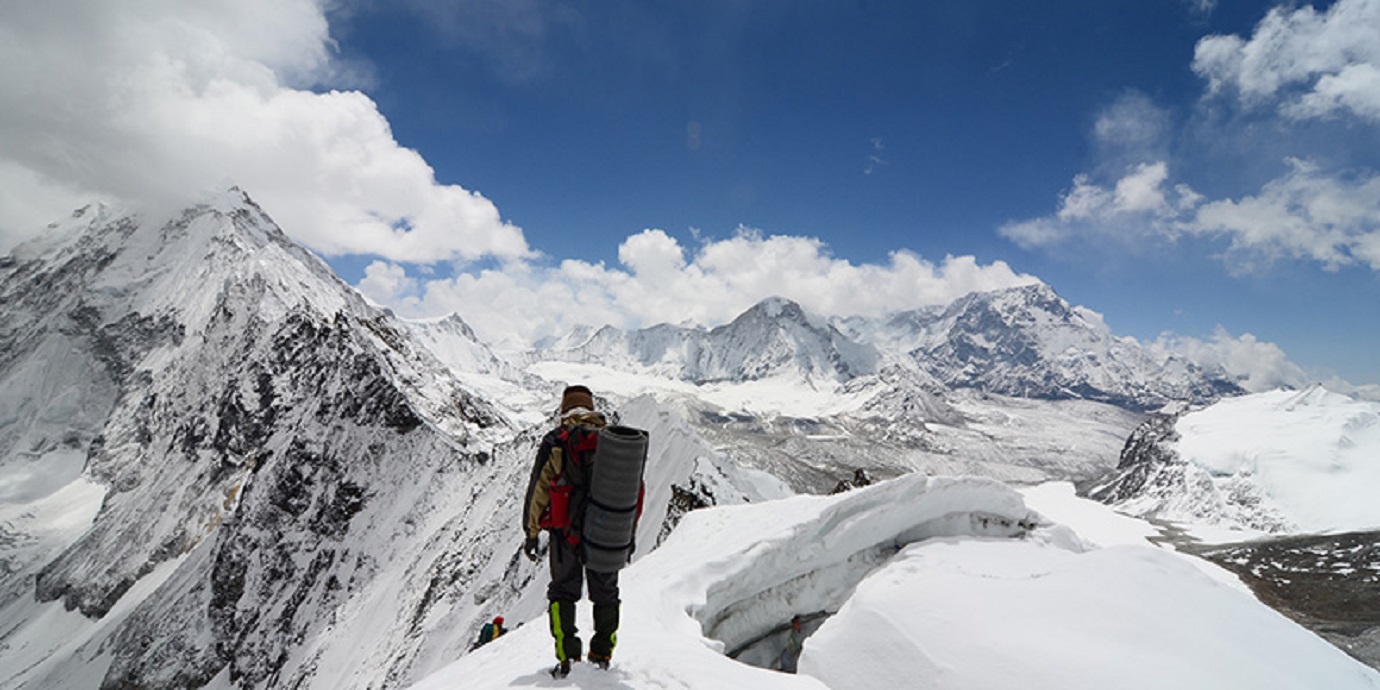
You’ll traverse the lower Mera Glacier, moving across gently rising ice fields surrounded by spectacular views of Mera Peak’s northern and central summits. The climb is not extremely steep but is demanding due to thin air and cold temperatures. A final push brings you to Mera La, a broad, windswept pass perched between Mera Peak and Kusum Kanguru.
The pass offers breathtaking panoramas of towering Himalayan giants—including Everest, Lhotse, Makalu—making the effort worthwhile. Depending on the itinerary, teams either camp at Mera La or continue slightly farther to a safer campsite below the pass.
Max. Altitude
5,415 m
Overnight
Mera La
Duration
4-5 hrs.From Mera La, the trail climbs steadily up the wide glacier toward High Camp. The ascent is moderate but feels challenging due to altitude, and the team moves roped up across snow-covered terrain with occasional crevasse zones. As you gain height, the panorama opens dramatically with Everest, Lhotse, Makalu, and Baruntse rising behind you. The final approach is a gradual climb to a rocky ridge where Mera High Camp sits, offering one of the most spectacular sunset viewpoints on the entire expedition. Here you rest, rehydrate, and prepare gear for the early-morning summit attempt.
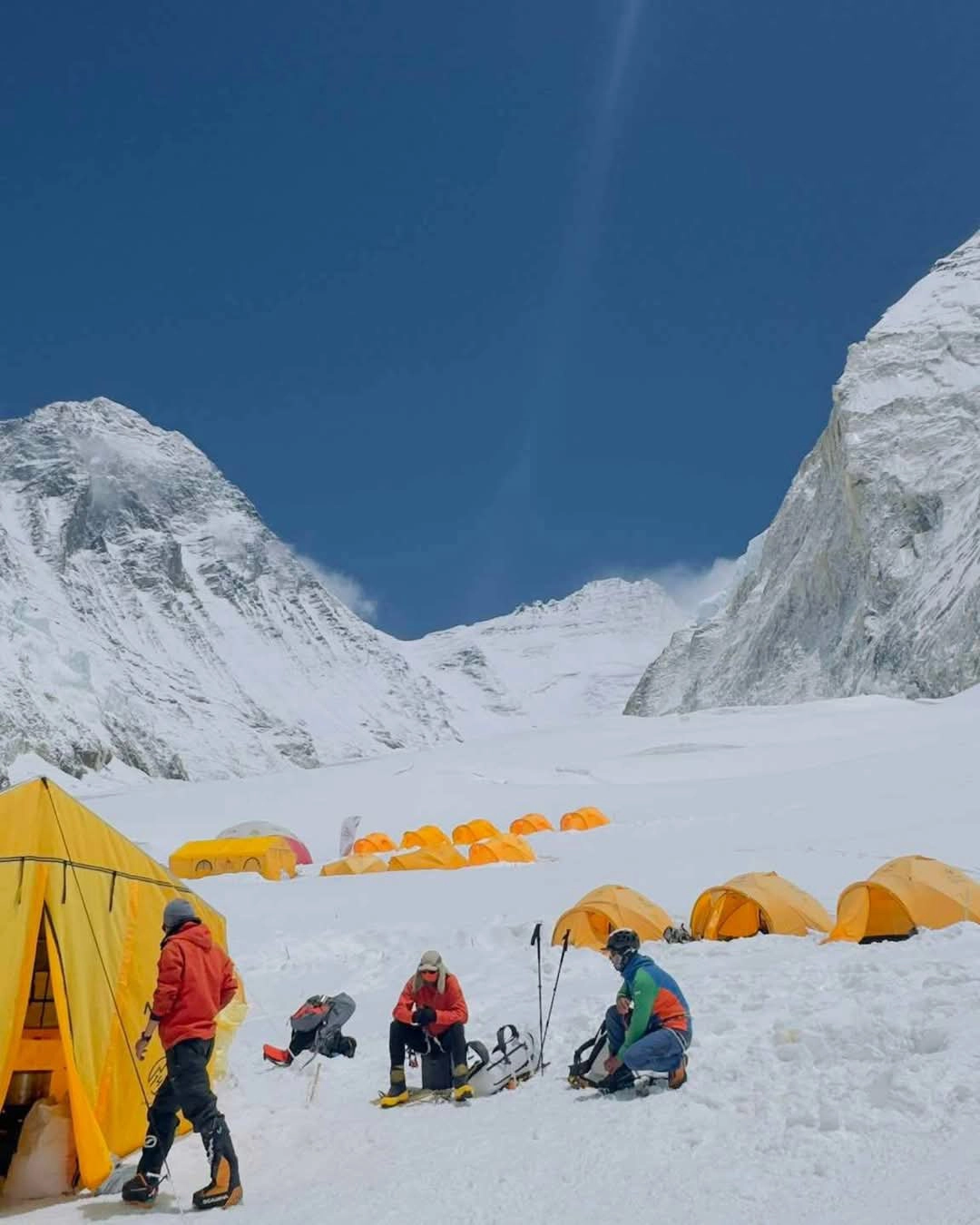
At High Camp, the environment becomes truly high-alpine—cold, exposed, and dramatic. Tents are set on a narrow ledge overlooking miles of untouched glacier. The support team helps with hot drinks and meals while the guide conducts a briefing about summit day procedures, safety, and pacing. The evening is focused on conserving energy, staying warm, and making final checks of crampons, harnesses, headlamps, and layers before the summit push.
Max. Altitude
5,780 m
Overnight
Mera High Camp
Duration
4-5 hrs.Summit day begins very early, often around 2:00–3:00 AM, with climbers roped up and moving under headlamps across the cold, crisp glacier. The initial section is a steady, gradual ascent on firm snow, but the altitude makes every step slow and controlled. As dawn approaches, the slope steepens near the summit ridge, requiring a final push up the snow dome—sometimes with a fixed rope depending on conditions. Reaching the top of Mera Peak (6,476 m) rewards you with one of the most breathtaking views in the Himalayas, showcasing Everest, Lhotse, Makalu, Cho Oyu, Kanchenjunga, and countless other 7,000–8,000 m giants.
After celebrating briefly at the summit, the descent follows the same route back to High Camp with careful pacing on the snow slopes. You’ll then continue descending past Mera La and drop into the remote Hinku Valley. The trail toward Kongma Dingma is long but mostly downhill, crossing glacial terrain, rocky ridges, and wide-open alpine meadows. The landscape becomes quieter and more isolated as you leave the Mera Peak climbing zone behind.
By the time you reach Kongma Dingma, you’re deep in one of the most pristine and untouched parts of the region—a peaceful high-altitude meadow ideal for rest after an intense summit day.
Max. Altitude
6,476 m at Mera Peak
Overnight
Kongma Dingma
Duration
10-12 hrs.A rest day at Kongma Dingma (around 4850m/15,912ft) is a crucial acclimatization stop, typically after summiting Mera Peak and before tackling the Amphu Lapcha Pass, offering a chance to relax, recover from the strenuous summit push, and enjoy stunning views of Baruntse, Chamlang, and surrounding glacial lakes before continuing the challenging trek towards Seto Pokhari and Amphu Lapcha Base Camp.
Max. Altitude
4,850 m
Overnight
Khongma DingmaThe Kongma Dingma to Seto Pokhari trek is a stunning, high-altitude walk in the remote Hongu Valley, typically part of Mera Peak climbs, offering incredible views of Chamlang, Baruntse, Everest, and Lhotse, as you journey through yak pastures to a beautiful glacial lake (Seto Pokhari means “White Lake”) for a tented camp stay, known for its raw wilderness and challenging beauty. Seto Pokhari is a holy glacial lake, a frozen pond in the high Honku Basin, serving as a base camp for reaching the Amphu Lapcha Pass. This section offers a deep dive into the Himalayas’ wilderness, feeling truly remote and off the beaten path, often requiring tented accommodation.
Max. Altitude
5,035 m
Overnight
Seto Pokhari
Duration
4-6 hrs.The trek from Seto Pokhari to Amphu Base Camp is a gradual but steady ascent through some of the most remote and dramatic high-altitude terrain in the Khumbu region. The trail winds across rocky ridges, moraine fields, and glacial debris, offering breathtaking views of surrounding peaks, icy glaciers, and rugged alpine landscapes. The air becomes thinner as you gain altitude, making the climb physically demanding but rewarding.
Along the way, trekkers can enjoy panoramic vistas of towering Himalayan giants and observe the raw wilderness of the upper Hinku Valley. Amphu Base Camp itself is a small, high-altitude plateau nestled among glaciers and steep mountain ridges. It serves as the staging area for the technical Amphu Labcha Pass, where climbers rest, acclimatize, and perform final gear checks before tackling the challenging pass.
The experience of reaching Amphu Base Camp combines the thrill of high-altitude trekking with the sense of isolation and adventure that comes from being deep in one of the Himalayas’ most pristine regions. It is a perfect opportunity to absorb the stunning natural beauty, prepare mentally and physically for the next day’s technical crossing, and appreciate the grandeur of the surrounding mountains.
Max. Altitude
5,650 m
Overnight
Amphu Lapcha Base Camp
Duration
5-6 hrs.Crossing the Amphu Lapcha Pass (5,845 m) is an extremely demanding and technical expedition that requires significant prior experience, a guide, and proper equipment. Chukhung village provides lodge accommodations, but camping near Imja Glacier is typically done at designated base camps as part of guided climbing expeditions. This is not a standard trek; it’s considered a challenging mountaineering route in the Himalayas. You must have advanced technical skills, including the use of ropes, crampons, and an ice axe, and be prepared for glacier travel. The camp at Imja Glacier or Chukhung is a high-altitude alpine base, surrounded by towering peaks and glaciers. It provides a safe, scenic spot to rest, recover, and reflect on crossing one of the most technical and remote passes of the trek.
Max. Altitude
5,845 m at Amphu Labcha Pass
Overnight
Camp at Imja Glacier/Chukhung
Duration
9-10 hrs.Today is a rest and acclimatization day at Chukhung (~4,730 m), giving your body time to recover after the demanding Amphu Labcha Pass crossing. Trekkers can take a short acclimatization hike to nearby ridges or viewpoints, which offers panoramic views of Lhotse, Ama Dablam, Island Peak, and surrounding glaciers. This helps your body adjust to the high altitude while allowing for some light activity.
The day is also perfect for hydration, proper nutrition, and a thorough gear check, ensuring that equipment is ready for the next stages of the trek. Chukhung provides a serene, high-alpine environment with spectacular scenery, peaceful meadows, and the chance to soak in the dramatic Himalayan landscape before continuing toward Everest Base Camp or descending further.
Max. Altitude
4,730 m
Overnight
ChukhungThe journey from Chukhung to Dingboche is a short, acclimatization-focused hop in the Everest region, while Dingboche to Lobuche is a key, higher-altitude stage on the main EBC trek, involving moraine walking and glacier views, often requiring acclimatization, leading to Lobuche as a vital stop before Gorakshep for Everest Base Camp. Chukhung offers peaks like Chukhung Ri for acclimatization, while Lobuche marks the approach to the Khumbu Glacier, offering stunning Himalayan vistas but challenging conditions.
Today’s trek begins with a descent from Chhukung (~4,730 m) down to Dingboche (~4,410 m), passing through scenic alpine meadows, moraines, and yak pastures. The trail is gentle and offers a welcome break after the strenuous Amphu Labtsa crossing, with sweeping views of surrounding peaks and glaciers.
From Dingboche, the trail gradually ascends toward Lobuche (~4,940 m). The route follows rocky moraine paths and glacial valleys, with steady uphill sections and occasional short downhill stretches. Along the way, trekkers are treated to panoramic views of Ama Dablam, Lhotse, and the high Khumbu peaks, making this a visually spectacular day despite moderate trekking effort.
Max. Altitude
4,940m
Overnight
Lobuche
Duration
8-10 hrs.Today’s trek takes you from Lobuche (~4,940 m) to Gorakshep (~5,164 m), the final stop before Everest Base Camp. The trail is mostly gradual uphill, following the rocky moraine and glacial paths along the Khumbu Glacier. Along the way, trekkers pass memorials to fallen climbers and enjoy panoramic views of Lhotse, Nuptse, Pumori, and Everest, making the journey both physically and emotionally memorable.
Gorakshep is a small settlement with tea houses and basic lodges, serving as a base for the next day’s trek to Everest Base Camp and optional hikes to Kala Patthar. The day is moderate in distance but high in altitude, making hydration and pace control essential.
Max. Altitude
5,164 m
Overnight
Gorakshep
Duration
3-4 hrs.Today’s trek is a descent from Gorakshep (~5,164 m) down to Pheriche (~4,371 m), following the Khumbu Glacier valley across rocky moraines, glacial streams, and high-altitude desert terrain. The trail is mostly downhill, providing much-needed relief after the strenuous days at Gorakshep and Everest Base Camp, while still requiring careful footing on uneven terrain.
As you descend, you’ll pass through sparse yak pastures, small tea houses, and high-alpine meadows, offering glimpses of local life and culture in this remote region. The trek affords stunning panoramic views of Everest, Lhotse, Nuptse, and Ama Dablam, with dramatic glaciers and icefalls visible along the way. The descent allows your body to recover from extreme altitudes while still experiencing the pristine beauty of the Khumbu region. Pheriche is a welcoming settlement where trekkers can rest, enjoy warm meals, and prepare for the next stage of the journey back toward lower altitudes.
Max. Altitude
4,371 m
Overnight
Pheriche
Duration
8-10 hrs.Today’s trek is a descent from Pheriche (~4,371 m) down to Namche Bazaar (~3,440 m), passing through the Khumbu Valley and along the Dudh Koshi River. The trail is mostly downhill, making the journey easier on the legs after the high-altitude exertion, but some uphill sections may appear as the trail contours along ridges and river valleys.
The route passes through Sherpa villages, prayer flags, and rhododendron forests, providing cultural insight along with stunning Himalayan scenery. Panoramic views of Ama Dablam, Thamserku, and the surrounding peaks accompany trekkers for much of the day. Crossing suspension bridges over glacial rivers adds adventure and scenic charm to the descent. Namche Bazaar, the largest town in the Khumbu region, offers a welcome mix of shops, teahouses, and bustling market life, where trekkers can rest, resupply, and enjoy the lively Sherpa culture.
Max. Altitude
3,440 m
Overnight
Namche Bazaar
Duration
8-10 hrs.Today’s trek descends from Namche Bazaar (~3,440 m) to Lukla (~2,860 m), mostly following the Dudh Koshi River valley. The trail is predominantly downhill, though a few short uphill sections occur along ridges and village paths. The descent is gradual, allowing your legs to recover while enjoying the stunning Himalayan landscapes one last time.
Along the way, trekkers pass through Sherpa villages, small tea houses, and suspension bridges surrounded by lush pine and rhododendron forests. Panoramic views of Thamserku, Kusum Kanguru, and other surrounding peaks accompany the journey, making for a scenic and memorable final day on the trail. Lukla, the gateway to the Everest region, offers small lodges, shops, and the famous airstrip, marking the end of the trek. Trekkers can relax, celebrate their journey, and prepare for the flight back to Kathmandu.
Max. Altitude
2,860 m
Overnight
Lukla
Duration
7-9 hrs.The journey from Lukla to Kathmandu begins with a scenic mountain flight, offering breathtaking aerial views of the Himalayas, including Everest, Lhotse, and Ama Dablam, as well as the deep valleys, rivers, and villages of the Khumbu region. The flight, usually around 35–45 minutes, provides a spectacular perspective of the trekking route and the glacial landscapes from above. Landing in Kathmandu, trekkers transition from the high-altitude wilderness to the bustling city, where they can enjoy comfort, hot showers, cultural sightseeing, and a chance to reflect on their unforgettable journey through the Everest region.
Max. Altitude
1,350 m
Overnight
Kathmandu
Duration
30 minutes flightAfter completing the trek and returning from Lukla, the final day in Kathmandu is reserved for departure. Trekkers check out from their hotel and are transferred to Tribhuvan International Airport for their onward flights. This day provides time to reflect on the remarkable journey through the Everest region, savor the memories of high Himalayan landscapes, Sherpa culture, and challenging adventures, and bid farewell to Nepal. It marks the end of an unforgettable trekking experience, leaving lasting impressions of the majestic mountains unforgettable Mera Peak & Amphu Labcha Pass – Everest Base Camp expedition.
Some important hints:
Clothing and accessories on trek
Other
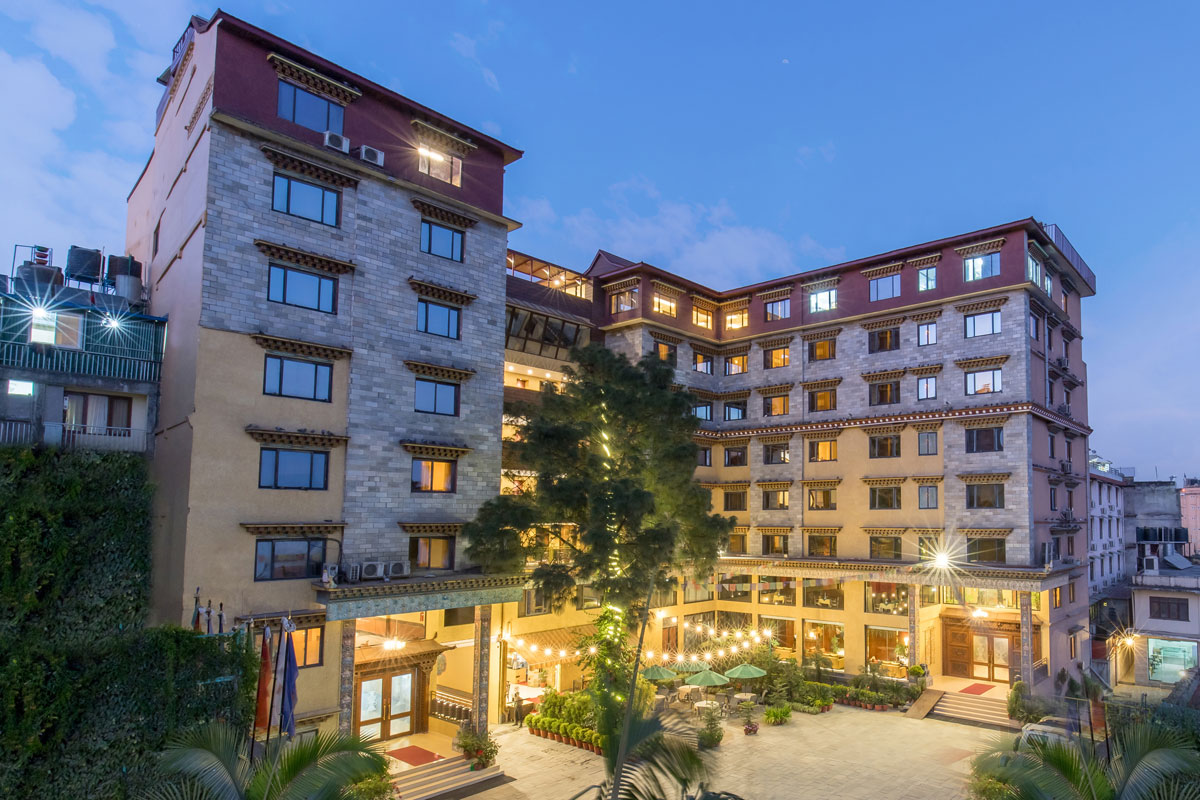
Hotel Tibet, a family-run boutique hotel that have blended traditional Tibetan designs with a touch of modern simplicity.
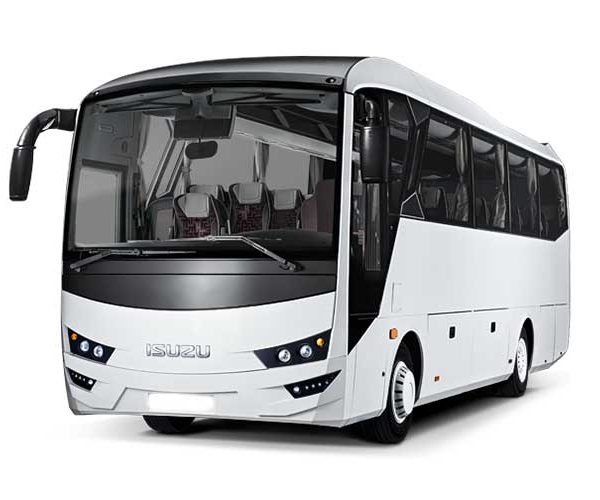
We provide professional Luxury Tourist Bus services designed for large groups, corporate retreats, and organized tours. Our fleet features modern, high-capacity buses equipped with comfortable reclining seats, full air conditioning, and wide windows for a premium sightseeing experience. With spacious under-carriage compartments for luggage and experienced drivers at the wheel, we ensure a safe, smooth, and relaxing journey on all major highways. Whether you are traveling across the city or across the country, our bus service offers the perfect blend of reliability, comfort, and affordability for your entire group.
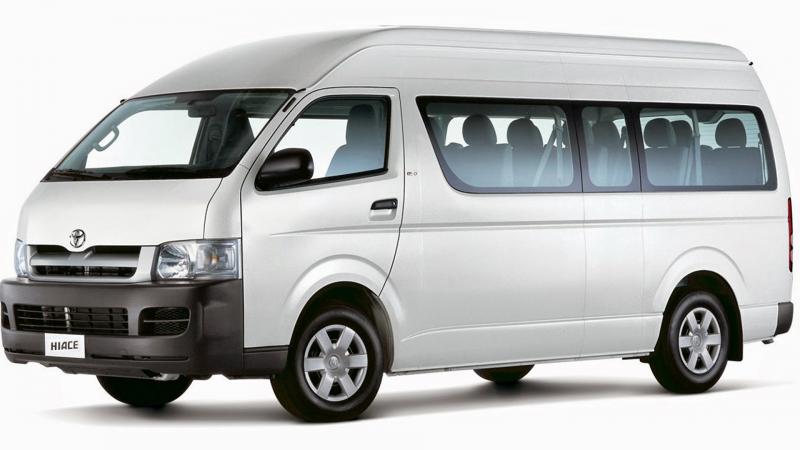
Our Toyota Hiace service offers the perfect balance of speed, comfort, and flexibility for medium-sized groups and families. Known for its reliability and agility, the "Jumbo" Hiace provides a fast and efficient way to reach your destination, easily navigating both smooth highways and narrower mountain roads. With a high-roof design for extra headroom, air-conditioned interiors, and a private "door-to-door" service, we ensure a premium travel experience that gets you there ahead of the crowd.

Our Mahindra Scorpio 4WD service offers the ultimate combination of power, durability, and rugged luxury for explorers and small groups. Engineered to conquer the demanding terrain of the Himalayas, the Scorpio provides a robust and dependable way to navigate steep inclines, unpaved tracks, and challenging weather conditions. With its high ground clearance, heavy-duty suspension, and powerful 4x4 capabilities, our private "door-to-trailhead" service ensures you reach your destination safely and comfortably, no matter how remote. Featuring an ergonomic cabin, climate control, and ample space for expedition gear, we deliver a high-performance travel experience designed to get you deep into the heart of the mountains where others cannot follow.
Yes, but with extra cost. Wi-Fi (Everest Link) and charging services are available in most villages, especially in lower sections.
Yes, it can happen. Proper acclimatization, slow pacing, staying hydrated, and listening to your guide are essential. Descend immediately if symptoms get worse.
Not mandatory, but previous multi-day trekking experience helps a lot. Good fitness and mental preparation are important.
The two best seasons are:
Spring (March–May) – clear skies, warmer temperatures, blooming rhododendrons.
Autumn (September–November) – stable weather and excellent mountain views.
WhatsApp +9779841603796
The Everest Three Passes Trek is one of the most spectacular and challenging treks...
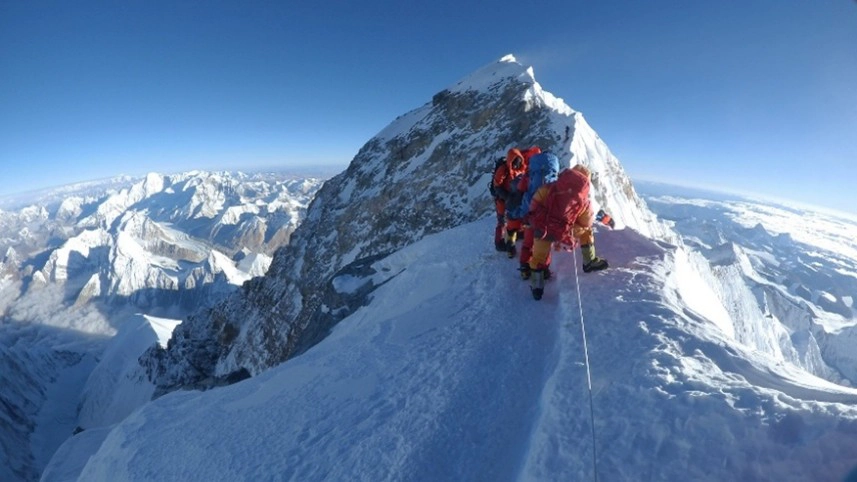
Himalayan Chemi Treks & Expedition invites you to join a life-changing journey to the...
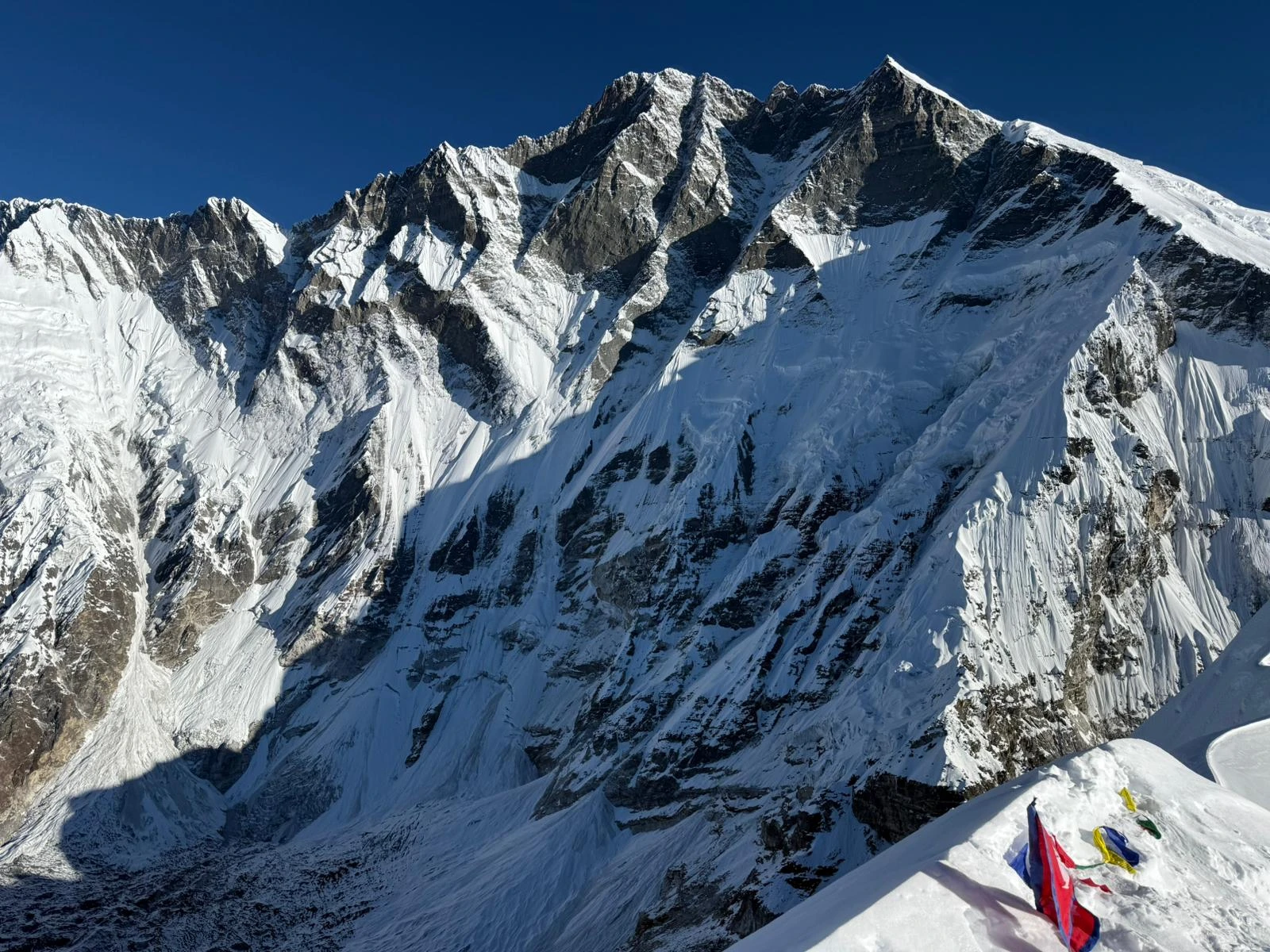
The Island Peak & Ama Dablam – Everest Base Camp Trek is a premium...
From Everest Base Camp to hidden valleys of Mustang, let us design a journey that’s truly yours.
Start Planning My Trip