Hotel Tibet
Hotel Tibet, a family-run boutique hotel that have blended traditional Tibetan designs with a touch of modern simplicity.

Expedition and Climbing

Duration
22 Days Trip
Meals
22B,22D,21L
Start Point
Kathmandu
End Point
Kathmandu
Style
Guided Expedition
Max. Altitude
6,189 m at Island Peak
Trip Grade
Challenging to Strenous
Lodging
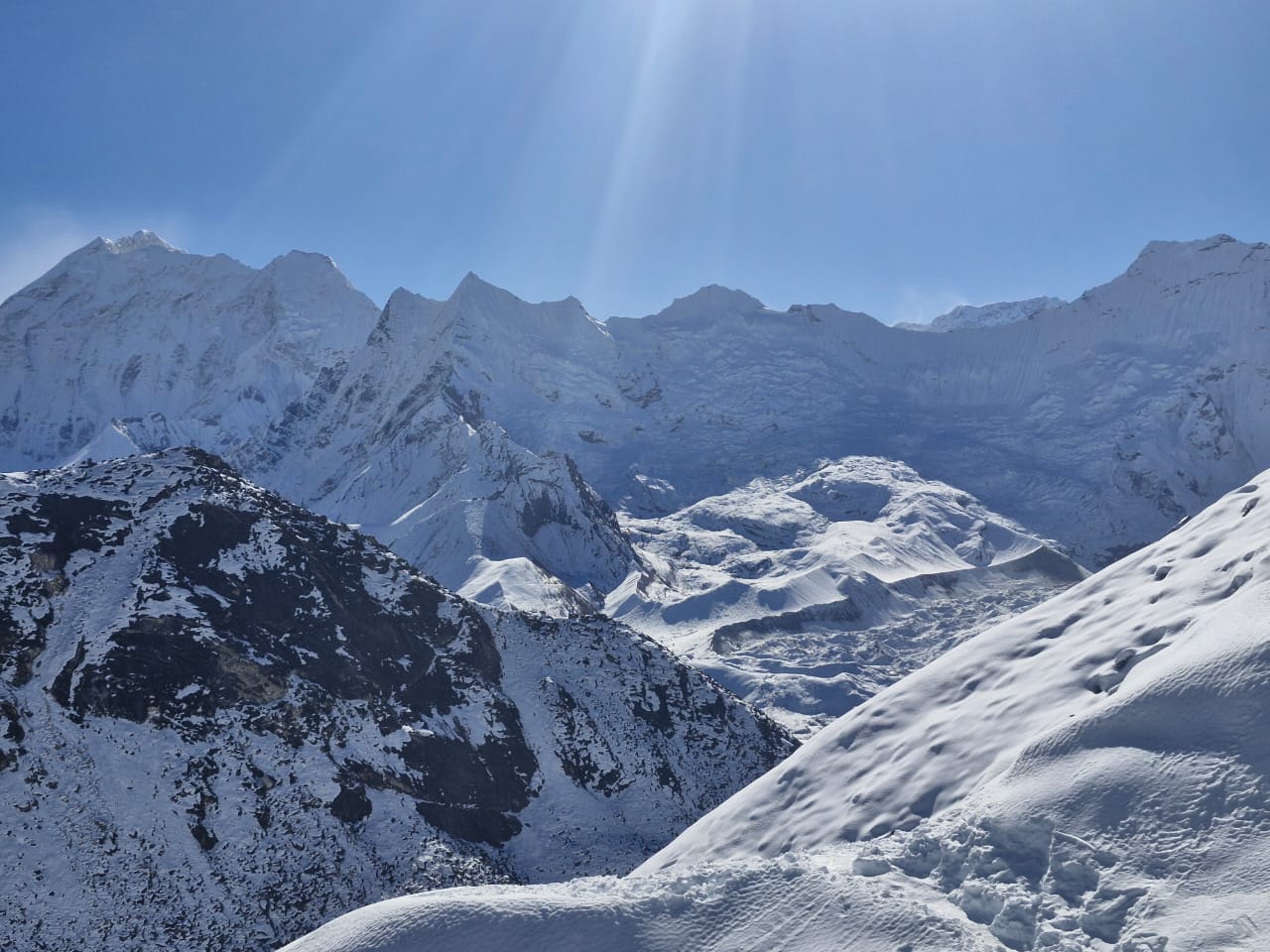
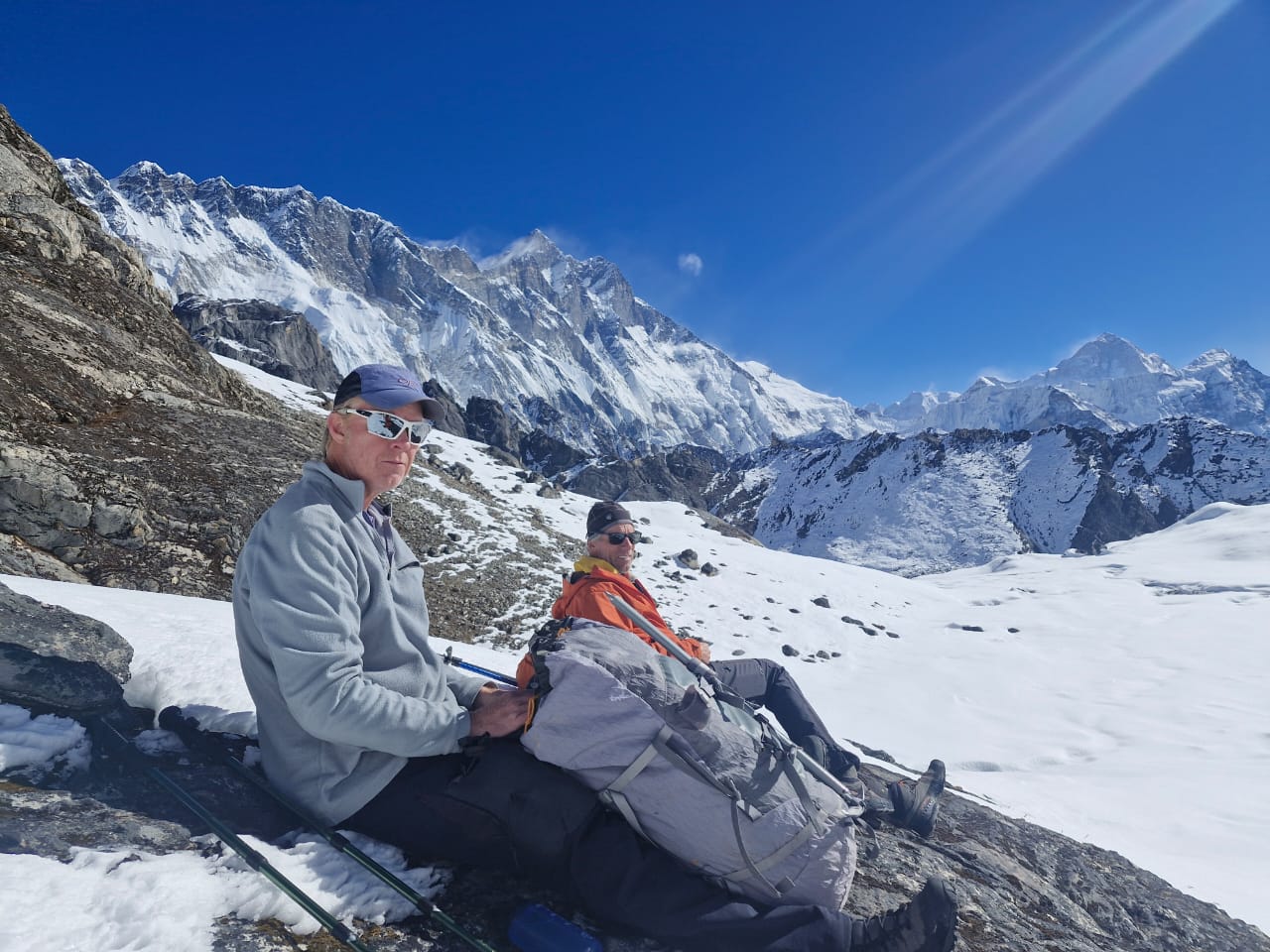
Teahouses (Mountain Lodges), Hotels in KathmanduThe Everest Three Passes Trek is one of the most spectacular and challenging treks in the world, offering adventurers a combination of high-altitude trekking, breathtaking Himalayan vistas, and a deep immersion into Sherpa culture. This trek connects the Khumbu region’s most iconic landscapes, including Everest Base Camp, Gokyo Lakes, and three major high passes – Renjo La, Cho La, and Kongma La.
Trekking through this route, you will experience pristine alpine valleys, glaciers, and traditional Sherpa villages, while enjoying unparalleled views of Everest, Lhotse, Makalu, Cho Oyu, and Ama Dablam. The trek also allows ample time for acclimatization at key villages like Namche Bazaar, Dingboche, and Chukhung, reducing the risk of altitude sickness and making the challenging high passes manageable for well-prepared trekkers.
This adventure is ideal for those with good physical fitness, a spirit for high-altitude trekking, and a desire to experience the raw beauty of the Himalayas beyond the typical EBC trek. The journey combines physical challenge, cultural encounters, and some of the most breathtaking mountain scenery in the world, making it a once-in-a-lifetime Himalayan experience.
A Himalayan Chemi representative will collect you from the airport. It’s a free day to prepare for your trek and buy last minute gear or supplies. If you have any energy, take in some of the world heritage sites that Kathmandu has to offer. Later in the evening, there will be a group briefing and welcome group dinner.
This day in Kathmandu (~1,400 m) is designed for light sightseeing and trek preparation. Trekkers can explore the city’s rich cultural landmarks, such as Swayambhu Nath (Monkey Temple), Boudhanath Stupa, or Durbar Square, depending on time and preference.
In addition to sightseeing, this day is used for trekking preparation: checking gear, repacking, arranging permits (TIMS and Sagarmatha National Park), and reviewing the itinerary with your guide. It ensures that all equipment is ready, and climbers are well-informed about altitude, safety, and trekking logistics.
Max. Altitude
1,400 mDistance: 8–12 km | Time: 4–5 hrs. | Ascent: +220m | Descent: -250m
Today, your day will begin with an exciting flight from Kathmandu to Lukla. The plane will be airborne for 30 minutes, and after you touch down, you will join the other team members. If you have to purchase some things, you can get them there, and afterward, we will proceed to Phakding. The journey from Lukla starts with a beautiful mountain flight, traversing a mild downhill path through charming Sherpa settlements, pine woodlands, and beside the Dudh Koshi River. Hikers walk by mani walls, prayer wheels, and suspension bridges as they take in their initial glimpses of the Khumbu area. The hike is straightforward and aids in acclimatization as the path travels to Phakding or a bit beyond to Monjo, where inviting tea houses, riverside views, and friendly Sherpa warmth create a pleasant initial night on the Everest journey.
Max. Altitude
2,860 m
Duration
4–5 hrs.Distance: 10–12 km | Time: 5–6 hrs. | Ascent: +830m | Descent: -10m
After breakfast, we will trek to Namche Bazaar, also known as the Gateway to Everest, situated at an altitude of 3440m, which is one of the top destinations in this region. The trek to Namche Bazaar is not that difficult, and the trail is rocky but beautiful too, as you will start seeing the Himalayas. Your trek starts with climbing uphill, crossing several suspension bridges over the Dudh Koshi River. Then, you will reach the Monjo village.
From Monjo village, we continue our trek and pass the rhododendron forest, and we will arrive at the Sagarmatha National Conservation Area’s entrance. Here you will do some paperwork, and then continue with the walk. By evening, we will reach Namche Bazaar.
Once we reach Namche Bazar, you will be greeted by the awe-inspiring sight of Mount Everest standing tall in the distance.
Overnight in Namche Bazaar.
Max. Altitude
3,440 m
Duration
5–6 hrs.Distance: 4–5 km | Time: 3–4 hrs. | Ascent: +440m | Descent: -440
Today, we will acclimatize in Namche, visit the village, and enjoy the breathtaking views of the Himalayas. After breakfast, we will hike to the Everest View Hotel (3,860m), the highest hotel in the Sagarmatha National Park. Also, there is a Khumjung village where you can go for a hike instead of the Everest View Hotel.
Returning from the hotel, we will then explore the Namche market. There is a Sherpa Museum situated above the village off the Tengboche trail. You will visit this museum, where you will witness the “Hall of Fame” gallery that includes the photos of the Everest summiteers, including Edmund Hillary and Tenzing Sherpa.
Overnight in Namche Bazaar.
Max. Altitude
3,880 m
Duration
3–4 hrs.Distance: 8–10 km | Time: 3–4 hrs. | Ascent: +360m
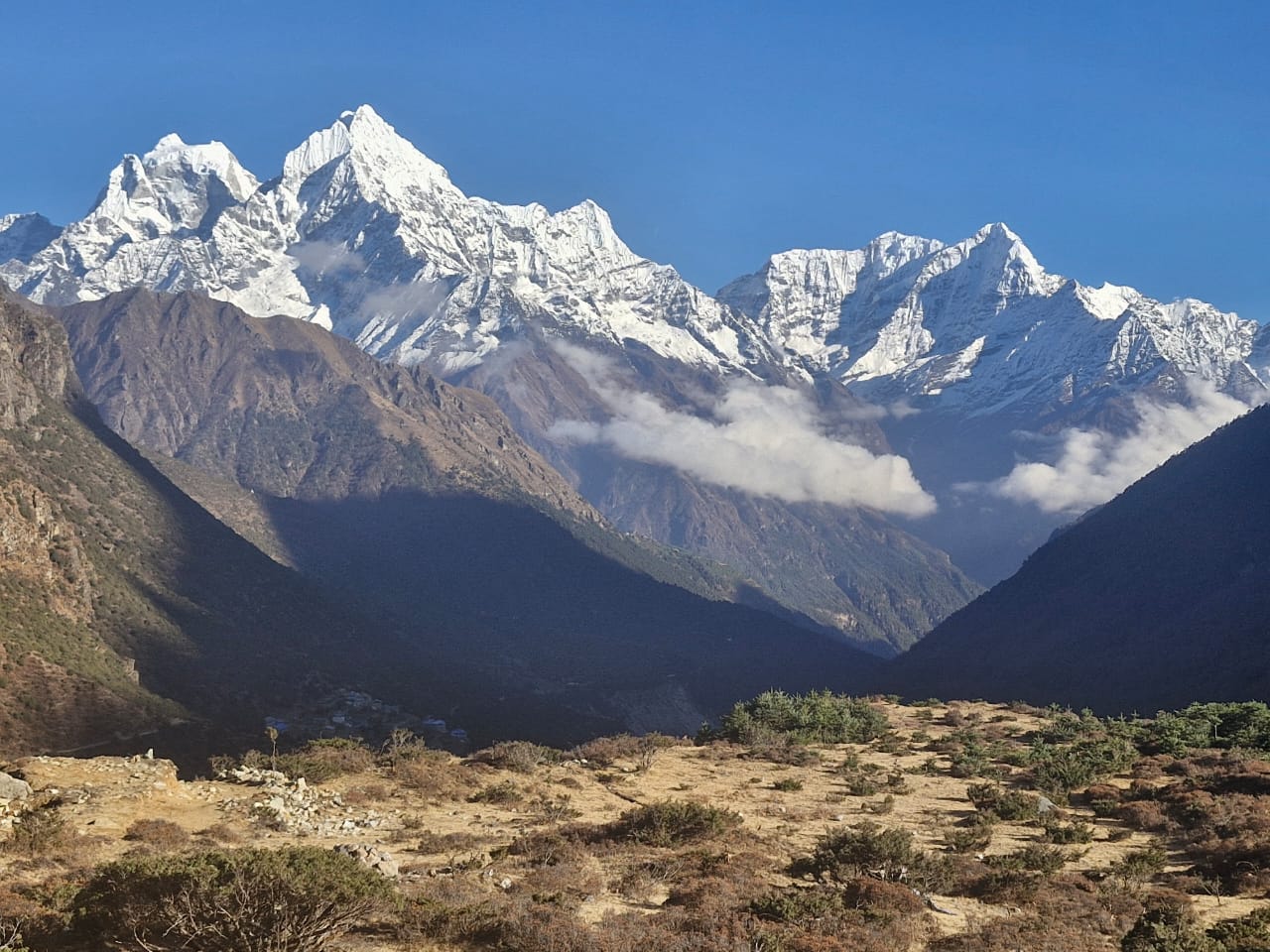
The trek from Namche Bazaar to Thame is a beautiful, relatively easy 3 to 4-hour journey that takes you away from the busier Everest Base Camp trail into the more traditional Bhote Koshi Valley. Starting from Namche (3,440m), the trail contours around the hillside, passing through fragrant pine and rhododendron forests with stunning views of Kongde Ri and Thamserku. You will pass through the charming village of Phurte—home to a forest nursery—and the small settlement of Thamo, where you can visit the Khari Gumba (a nunnery). As you cross the Bhote Koshi River and make the final gentle climb to Thame (3,800m), you enter a significant cultural hub known as the home of many famous Sherpa mountaineers, including Tenzing Norgay and Apa Sherpa.
Max. Altitude
3,800m
Duration
3–4 hrs.Distance: 8–10 km | Time: 3–4 hrs. | Ascent: +580m
The trek from Thame to Lungden is a steady, scenic ascent of approximately 3 to 4 hours that takes you deeper into the quiet Bhote Koshi Valley toward the Renjo La Pass. Leaving Thame, the trail heads north, passing through small Sherpa hamlets like Marulung and grazing pastures filled with yaks. This route is part of the ancient salt trade path between Nepal and Tibet, offering a much more rugged and “untouched” feel compared to the main Everest trails. As you arrive in Lungden, the landscape becomes stark and alpine, surrounded by towering snow-capped peaks and providing a perfect high-altitude base for those preparing to cross the Renjo La the following day.
Max. Altitude
4,380m
Duration
3–4 hrs.Distance: 8–10 km | Time: 7–8 hrs. | Ascent: +980m | Descent: -570m
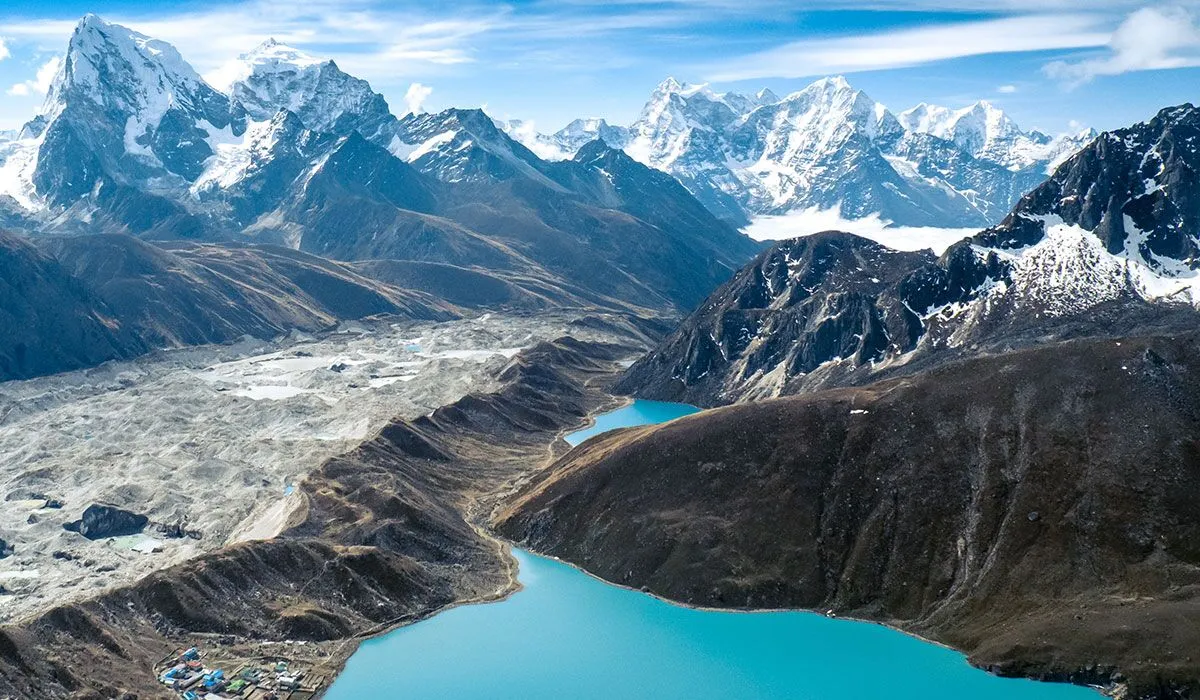
The trek from Lungden to Gokyo via the Renjo La Pass is a demanding yet spectacular 6 to 8-hour journey that serves as a crown jewel of the Everest region’s Three Passes trek. The day begins with a steady ascent through a high-altitude alpine desert, eventually reaching the prayer-flag-draped summit of the pass, which offers one of the most iconic panoramas in the world: a massive sweep of the Himalayas featuring Everest, Lhotse, Makalu, and Cho Oyu towering over the turquoise Gokyo Lakes and the vast Ngozumpa Glacier. After soaking in the views, a steep descent on a well-constructed stone staircase leads you down to the shores of the third lake, Dudh Pokhari, where the small settlement of Gokyo provides a peaceful lakeside sanctuary. This crossing is widely considered to have the best views in the entire Khumbu region, rewarding the physical effort with a truly surreal mountain landscape.
Max. Altitude
5,360m
Duration
7–8 hrs.Distance: 2 km | Time: 3–4 hrs. | Ascent: +567m | Descent: -567m
The climb to Gokyo Ri (5,357m) is a quintessential Himalayan experience, typically taking 3 to 4 hours for the round trip from Gokyo village. Most trekkers begin the ascent in the pre-dawn cold to reach the summit for sunrise, navigating a steep, winding path of dirt and loose rock that gains about 600 meters in elevation. Upon reaching the prayer-flag-strewn peak, you are rewarded with what many consider the finest view in the Everest region: a breathtaking four-peak panorama of Everest, Lhotse, Makalu, and Cho Oyu, alongside the shimmering turquoise lakes below and the massive Ngozumpa Glacier stretching across the valley. The descent back to Gokyo (4,790m) is much faster, usually taking about an hour, allowing you to return to your lodge for a well-earned breakfast while basking in the glow of the morning sun hitting the peaks.
Max. Altitude
5,357m
Duration
3–4 hrs.Distance: 6-8 km | Time: 3–4 hrs. | Descent: -90m
The trek from Gokyo to Thangnak (4,700m) is a relatively short but technically engaging journey of approximately 2 to 3 hours, primarily centered on the traverse of the Ngozumpa Glacier, the longest glacier in the Himalayas. Leaving the bright turquoise shores of the third Gokyo Lake, you immediately descend onto the glacier’s lateral moraine, entering a surreal world of shifting grey debris, frozen meltwater pools, and creaking ice. Navigating the glacier requires focus, as the trail winds over steep mounds of loose rock and sand that change slightly each season, but the effort is rewarded with a raw, close-up look at the immense power of the moving ice. Once across the terminal moraine on the eastern side, a final short walk leads you into the quiet, sheltered hamlet of Thangnak (also known as Dragnag), where you can spend a restful afternoon hydrating and mentally preparing for the rigorous Cho La Pass crossing early the next morning.
Max. Altitude
4,700m
Duration
3–4 hrs.Distance: 8-9 km | Time: 6–7 hrs. | Ascent: +720m | Descent: -590m
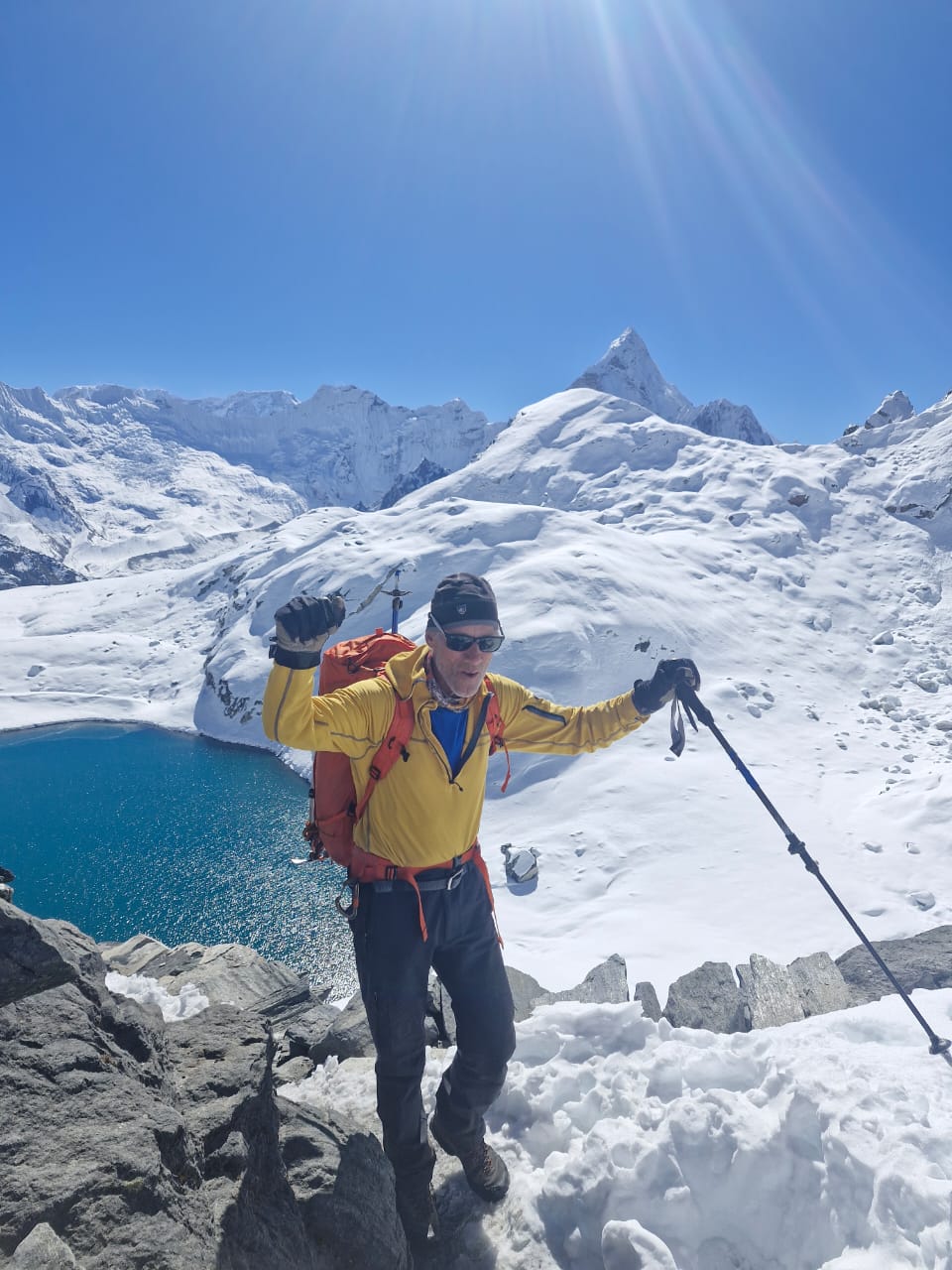
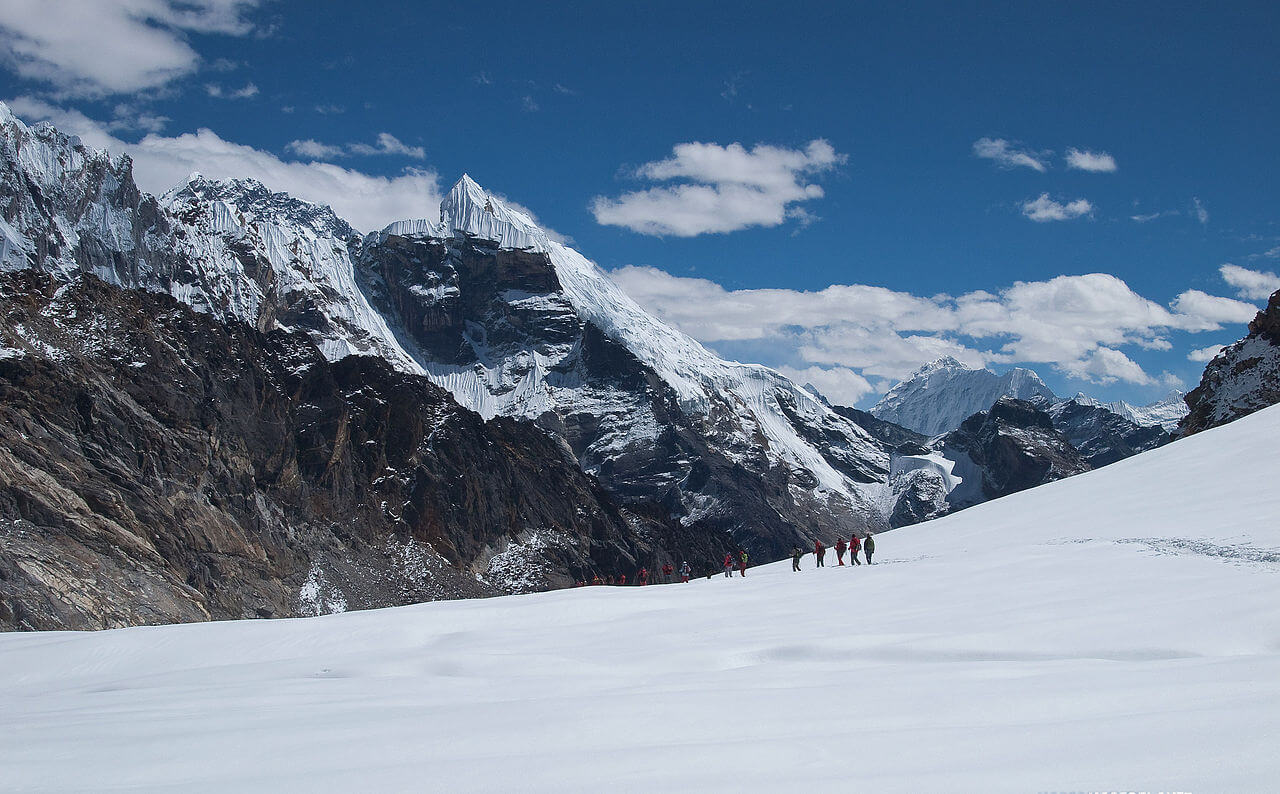
The trek from Thangnak to Dzongla (4,830m) via the Cho La Pass (5,420m) is a strenuous and iconic 6 to 7 hours day that requires an early pre-dawn start to ensure a safe crossing before the winds pick up. The trail begins with a steep, rocky scramble up a series of switchbacks and boulders to reach the summit, where you are rewarded with a dramatic transition from bare rock to a vast, snow-covered glacial plateau. Navigating the glacier—often requiring micro-spikes for traction—offers surreal views of the surrounding giants like Cholatse and Ama Dablam, followed by a careful descent over loose scree and rocky paths down to the small, remote settlement of Dzongla. This leg is widely considered one of the most technical and rewarding of the Everest region, providing a powerful sense of accomplishment as you move from the Gokyo Valley toward the final approach to Everest Base Camp.
Max. Altitude
5,420m
Duration
6–7 hrs.Distance: 10-11 km | Time: 6–7 hrs. | Ascent: +334m
The trek from Dzongla to Gorakshep is a stunning and physically demanding 6 to 7-hour journey that first connects you back to the main Everest Base Camp trail at Lobuche. The morning starts with a scenic, relatively flat contour around the base of Cholatse, offering wide vistas of the Khumbu Valley and the iconic blue waters of Chola Tsho Lake, before making a final short climb to join the busy hub of Lobuche for a lunch break. From there, the trail becomes more rugged and rocky as you wind through the lateral moraine of the Khumbu Glacier, navigating uneven terrain with views of Nuptse and Pumori looming ahead. The final stretch into Gorakshep, the highest permanent settlement on the trek, is a slow and steady grind through high-altitude desert, placing you at the doorstep of both Everest Base Camp and the Kala Patthar viewpoint for your final ascent.
Max. Altitude
5,164m
Duration
6–7 hrs.Distance: 8-9 km/12-13 km| Time: 6–7/7-8 hrs. | Ascent: +381/200m | Descent: -605/424m
To help you choose between the two, the main difference is that Kala Patthar is for the view, while Everest Base Camp (EBC) is for the destination. At Kala Patthar (5,545m), you get the absolute best panorama in the region, including a clear, unobstructed look at the summit of Mount Everest, the Khumbu Icefall, and the massive Nuptse-Lhotse wall, making it the photographer’s favorite.2 On the other hand, Everest Base Camp (5,364m) is a rocky, glacier-covered area where you stand at the very foot of the mountain; however, because you are so close, the massive ridge of Nuptse actually blocks your view of Everest’s summit. While EBC lets you experience the high-energy atmosphere of the climbing expeditions and the raw beauty of the Khumbu Glacier, Kala Patthar provides the emotional “I saw the top of the world” moment that most trekkers are looking for.
Max. Altitude
5,545m
Duration
6–7/7-8 hrs.Distance: 10-11 km| Time: 8-10 hrs. | Ascent: +595m | Descent: -805m
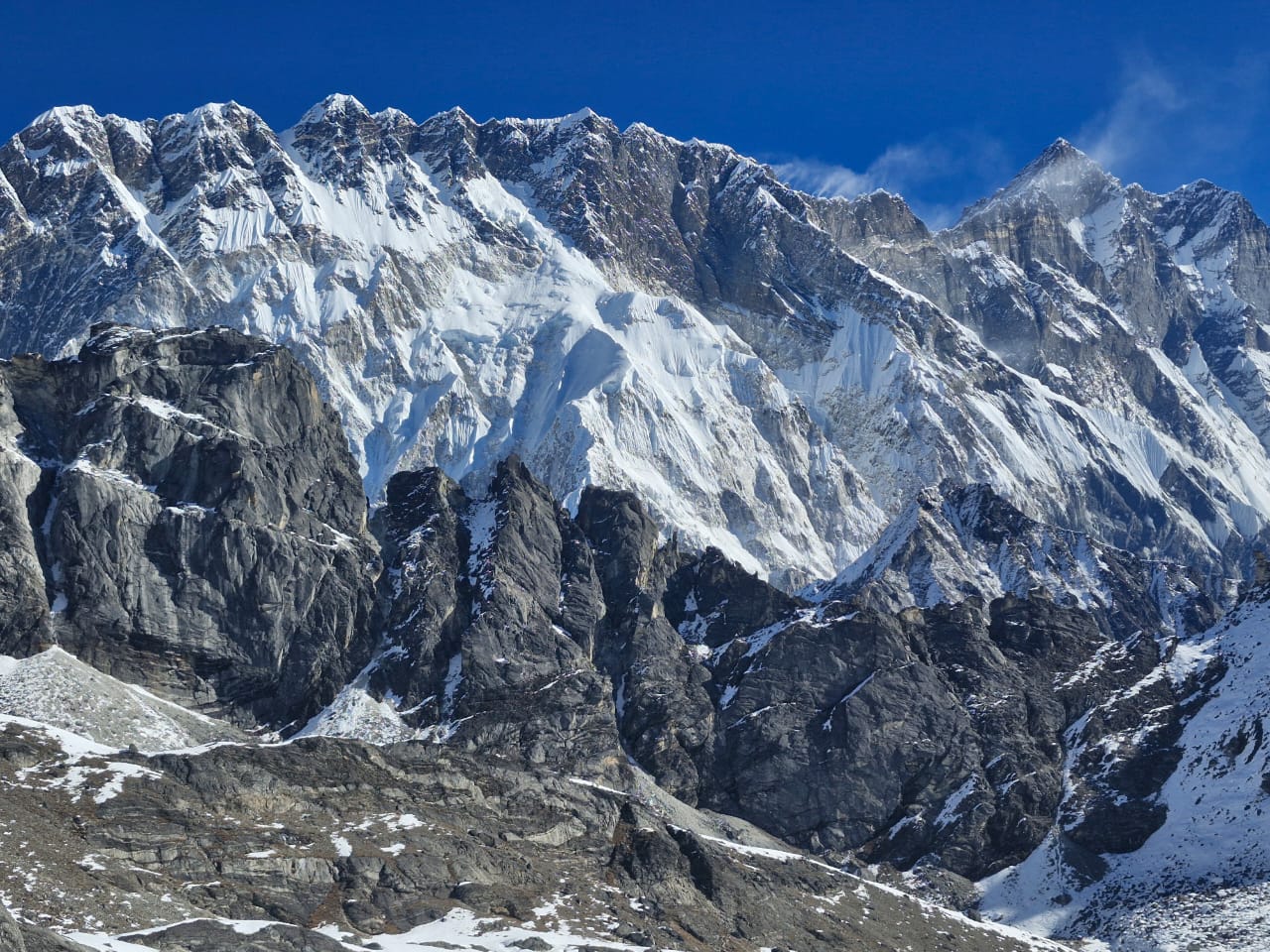
The trek from Lobuche to Chhukung via the Kongma La Pass (5,535m) is widely considered the most difficult yet rewarding day of the Three Passes Trek, typically taking 8 to 10 hours of intense effort. The journey begins with a challenging crossing of the shifting, rock-strewn Khumbu Glacier, followed by a relentless and steep ascent to the summit of the highest of the three passes. At the top of Kongma La, you are greeted by an intimate, stunning view of Makalu, Lhotse, and Nuptse, as well as the turquoise glacial lakes nestled just below the pass. The descent into the Imja Valley is exceptionally steep and taxing on the knees, eventually leveling out into a high-alpine trail that leads you to the quiet village of Chhukung, where the massive south face of Lhotse towers directly overhead.
Max. Altitude
5,535m
Duration
8-10 hrs.Distance: 6-7 km| Time: 3-5 hrs. | Ascent: +816m | Descent: -816m
A rest day in Chhukung (4,730m) is essential for recovery and a critical opportunity to conduct a thorough gear check, especially if you are preparing for Island Peak or the final legs of the Three Passes Trek. This time should be used to inspect your high-altitude clothing, ensuring your layering system is intact and your down jacket and sleeping bag are dry, while also checking that your boots are in good condition and your trekking poles are functioning properly. If you are heading for a climb, this is the moment to rent or double-check technical equipment like crampons, ice axes, harnesses, and helmets at the local teahouses, ensuring everything fits perfectly over your boots and layers. Beyond gear, it is a day for active recovery—taking a short hike to Chhukung Ri (5,546m) to maintain acclimatization—and organizing your daypack with essentials like sunscreen, headlamps with fresh batteries, and high-energy snacks for the upcoming challenges.
Max. Altitude
4,730m
Duration
3-5 hrs.Distance: 5-6 km| Time: 3-4 hrs. | Ascent: +370m
The trek from Chhukung to Island Peak Base Camp is a relatively short but scenic journey of approximately 3 to 4 hours that takes you deeper into the heart of the Imja Valley. The trail follows a fairly level path at first, winding alongside the moraine of the Lhotse Glacier and passing the massive, turquoise Imja Tsho glacial lake, which provides a dramatic backdrop against the towering south face of Lhotse. As you approach the base camp, the terrain becomes more rugged and sandy, eventually leading to a sheltered area nestled between the mountain and the lateral moraine where the colorful tents of climbers are often visible. Arriving at the base camp early allows you plenty of time to rest, hydrate, and practice your basic climbing skills—such as using a jumar on a fixed rope—with your guides before the midnight summit push.
Max. Altitude
5,100m
Duration
3-4 hrs.Distance: 17-20 km| Time: 12-13 hrs. | Ascent: +1,065m | Descent: -1,435m
The summit climb from Island Peak Base Camp to the top and the long descent back to Chhukhung is an exhausting 12 to 13 hours push that typically begins around midnight to ensure you reach the summit by sunrise and descend before high winds arrive. The climb starts with a steep, rocky scramble up “High Camp” and through a narrow gully, leading to the crampon point where you transition onto the glacier for a roped-up trek across snow and ice. The final challenge is a near-vertical, 100-meter headwall of ice and snow using fixed ropes and a jumar, which rewards you with a breathtaking summit view of Lhotse, Makalu, and Baruntse. After a quick celebration, you must carefully rappel down and retrace your steps back to Base Camp for a brief rest, followed by the final three-hour hike across the sandy moraines to return to the relative comfort and thick air of Chhukhung for a well-deserved celebration.
Max. Altitude
6,165m
Duration
12-13 hrs.Distance: 6-8 km| Time: 3-4 hrs. | Descent: -745m
The trek from Chhukhung to Pangboche (3,930m) is a scenic and mostly downhill journey of approximately 3 to 4 hours that offers a wonderful sense of relief as you descend into the more oxygen-rich air of the lower valleys. The trail leads you back down the Imja Valley, passing through the small summer settlements of Dingboche and Somare, where the landscape transitions from the harsh, high-alpine rocks and glaciers of the Three Passes back into the yellow grasslands and shrubbery of the Khumbu. Throughout the walk, you are treated to a constantly changing and magnificent perspective of Ama Dablam, which appears to dominate the skyline as its iconic “Mother’s Necklace” shape comes into full view. Upon reaching Pangboche, the oldest permanent settlement in the region, you can visit the ancient monastery or simply enjoy the increased warmth and comfort of a lower-altitude teahouse after your successful Island Peak summit.
Max. Altitude
3,985m
Duration
3-4 hrs.Distance: 13-14 km| Time: 6-7 hrs. | Descent: -545m
The trek from Pangboche to Namche Bazaar (3,440m) is a beautiful 6 to 7 hours journey that descends through lush forests and crosses the Dudh Koshi River before a final climb back to the Khumbu’s central hub. Leaving the ancient shadows of Pangboche, the trail winds down through rhododendron and birch forests to the riverside village of Phunki Thenga, where you can pause to watch the water-driven prayer wheels before beginning the steep, switchback ascent to Tengboche. After visiting the famous monastery and enjoying one last panoramic view of Everest and Ama Dablam, the path drops sharply down to the river once more and then contours around the hillside through Kyangjuma, eventually leading you into the bustling horseshoe-shaped bowl of Namche Bazaar. Arriving in Namche feels like returning to civilization, offering the chance to enjoy a celebratory coffee at a bakery, browse the local markets, and enjoy the luxury of a hot shower after your long journey in the high mountains.
Max. Altitude
3,440m
Duration
6-7 hrs.Distance: 18 km | Time: 6–7 hrs. | Ascent: +60m | Descent: -640m
The trek from Namche Bazaar to Lukla is the final and often long day of the Everest journey, gradually descending through rhododendron and pine forests, past small Sherpa villages, mani walls, and riverside trails. Trekkers retrace parts of the route taken on the way in, passing through Phakding or Monjo, crossing suspension bridges, and enjoying sweeping views of the Dudh Koshi River and surrounding ridges. The descent allows for easier walking after the high-altitude sections of the trek, while still providing opportunities to observe local culture, prayer wheels, and traditional stone stupas. Arriving in Lukla (2,860 m), trekkers are welcomed by the bustling lodge area and the famous airstrip, marking the completion of a remarkable high Himalayan journey and preparing for the flight back to Kathmandu.
Max. Altitude
2,860 m
Duration
6–7 hrs.Flight: 30 minutes | Descent: -1,510m
The journey from Lukla to Kathmandu begins with a scenic mountain flight, offering breathtaking aerial views of the Himalayas, including Everest, Lhotse, and Ama Dablam, as well as the deep valleys, rivers, and villages of the Khumbu region. The flight, usually around 35–45 minutes, provides a spectacular perspective of the trekking route and the glacial landscapes from above. Landing in Kathmandu, trekkers transition from the high-altitude wilderness to the bustling city, where they can enjoy comfort, hot showers, cultural sightseeing, and a chance to reflect on their unforgettable journey through the Everest region.
Duration
30 min FlightAfter completing the trek and returning from Lukla, the final day in Kathmandu is reserved for departure. Trekkers check out from their hotel and are transferred to Tribhuvan International Airport for their onward flights. This day provides time to reflect on the remarkable journey through the Everest region, savor the memories of high Himalayan landscapes, Sherpa culture, and challenging adventures, and bid farewell to Nepal. It marks the end of an unforgettable trekking experience, leaving lasting impressions of the majestic mountains and the vibrant culture of the Khumbu.
Some important hints:
Clothing and accessories on trek
Other
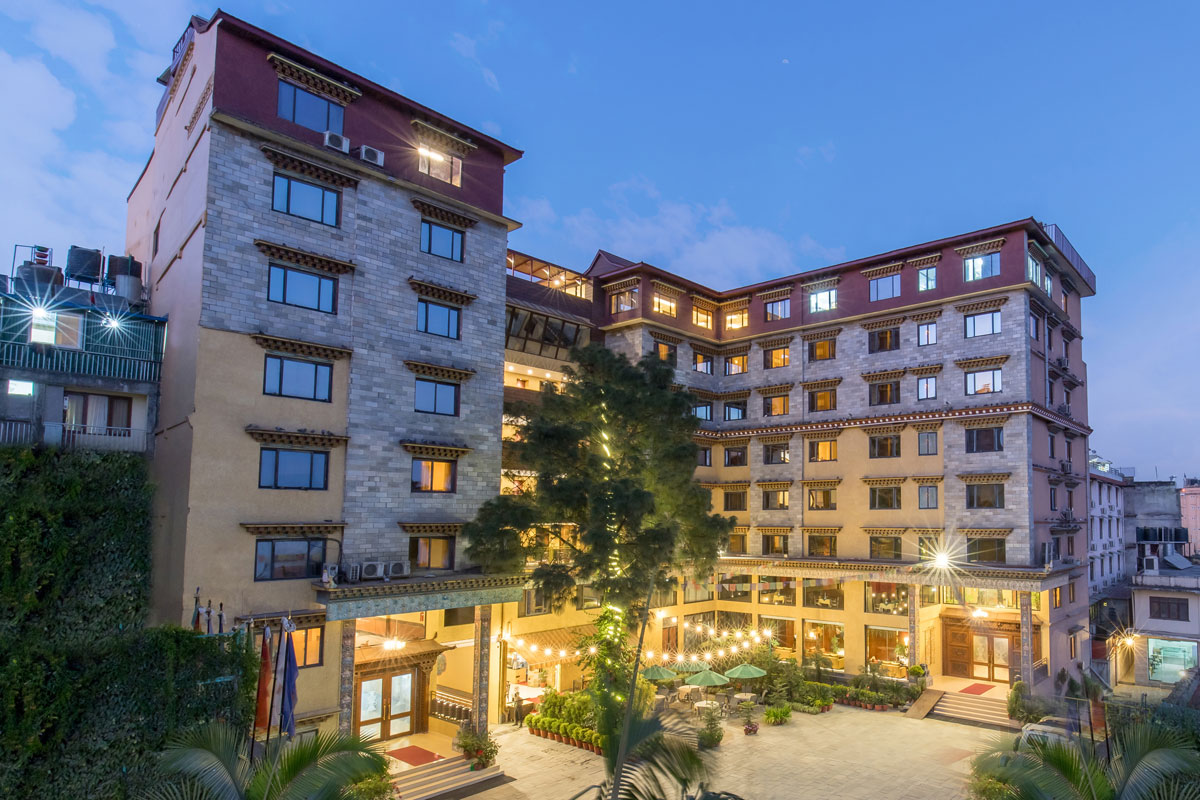
Hotel Tibet, a family-run boutique hotel that have blended traditional Tibetan designs with a touch of modern simplicity.
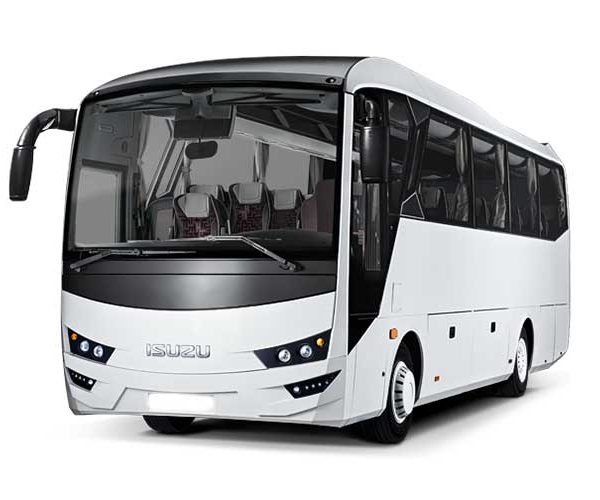
We provide professional Luxury Tourist Bus services designed for large groups, corporate retreats, and organized tours. Our fleet features modern, high-capacity buses equipped with comfortable reclining seats, full air conditioning, and wide windows for a premium sightseeing experience. With spacious under-carriage compartments for luggage and experienced drivers at the wheel, we ensure a safe, smooth, and relaxing journey on all major highways. Whether you are traveling across the city or across the country, our bus service offers the perfect blend of reliability, comfort, and affordability for your entire group.
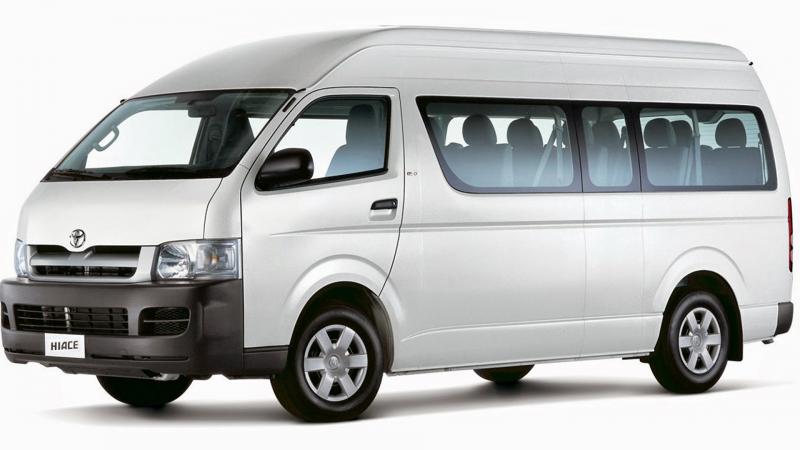
Our Toyota Hiace service offers the perfect balance of speed, comfort, and flexibility for medium-sized groups and families. Known for its reliability and agility, the "Jumbo" Hiace provides a fast and efficient way to reach your destination, easily navigating both smooth highways and narrower mountain roads. With a high-roof design for extra headroom, air-conditioned interiors, and a private "door-to-door" service, we ensure a premium travel experience that gets you there ahead of the crowd.

Our Mahindra Scorpio 4WD service offers the ultimate combination of power, durability, and rugged luxury for explorers and small groups. Engineered to conquer the demanding terrain of the Himalayas, the Scorpio provides a robust and dependable way to navigate steep inclines, unpaved tracks, and challenging weather conditions. With its high ground clearance, heavy-duty suspension, and powerful 4x4 capabilities, our private "door-to-trailhead" service ensures you reach your destination safely and comfortably, no matter how remote. Featuring an ergonomic cabin, climate control, and ample space for expedition gear, we deliver a high-performance travel experience designed to get you deep into the heart of the mountains where others cannot follow.
Yes, but with extra cost. Wi-Fi (Everest Link) and charging services are available in most villages, especially in lower sections.
Yes, it can happen. Proper acclimatization, slow pacing, staying hydrated, and listening to your guide are essential. Descend immediately if symptoms get worse.
Not mandatory, but previous multi-day trekking experience helps a lot. Good fitness and mental preparation are important.
The two best seasons are:
Spring (March–May) – clear skies, warmer temperatures, blooming rhododendrons.
Autumn (September–November) – stable weather and excellent mountain views.
WhatsApp +9779841603796
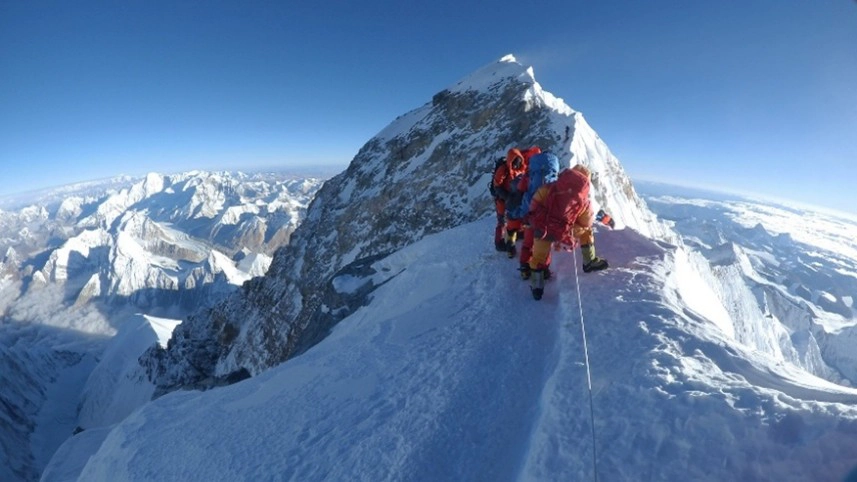
Himalayan Chemi Treks & Expedition invites you to join a life-changing journey to the...
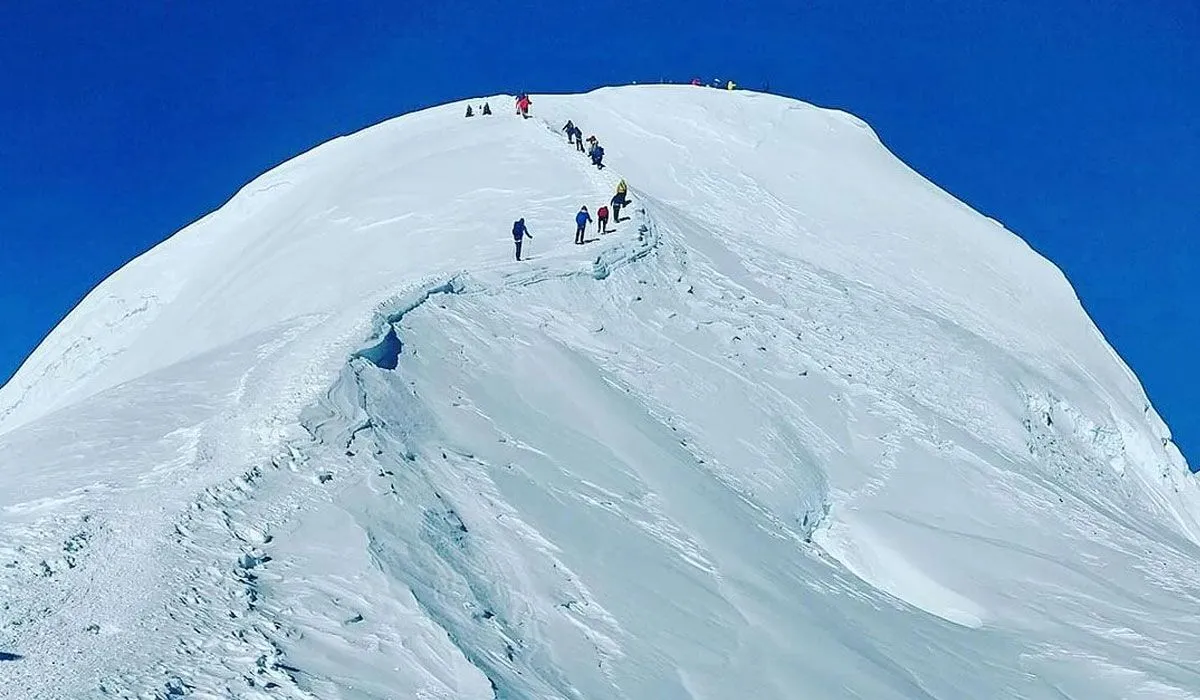
The Mera Peak & Amphu Labcha Pass trek is one of Nepal’s most exciting...
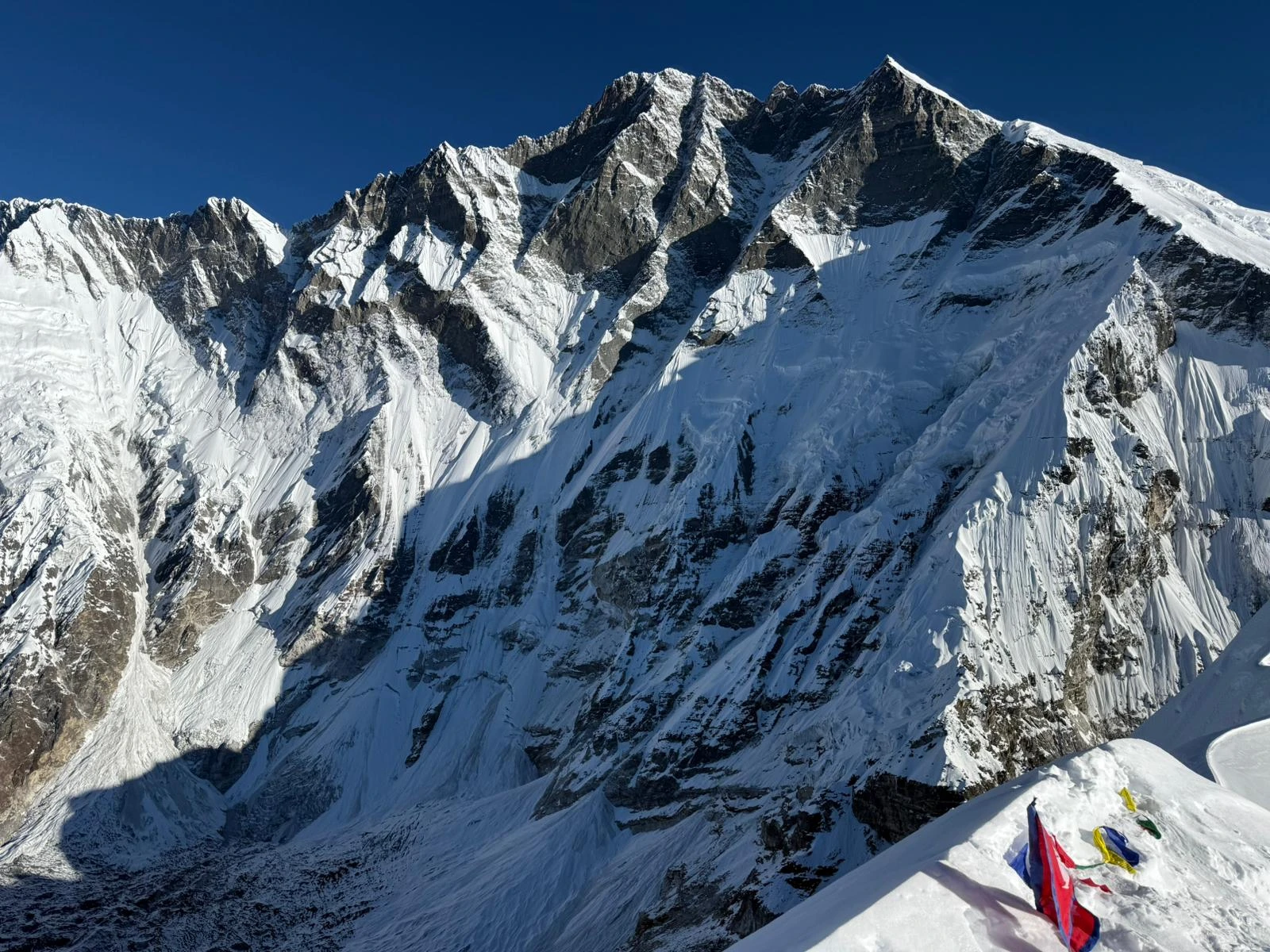
The Island Peak & Ama Dablam – Everest Base Camp Trek is a premium...
From Everest Base Camp to hidden valleys of Mustang, let us design a journey that’s truly yours.
Start Planning My Trip